ZAP! Conservationists In Action by Brookfield Zoo
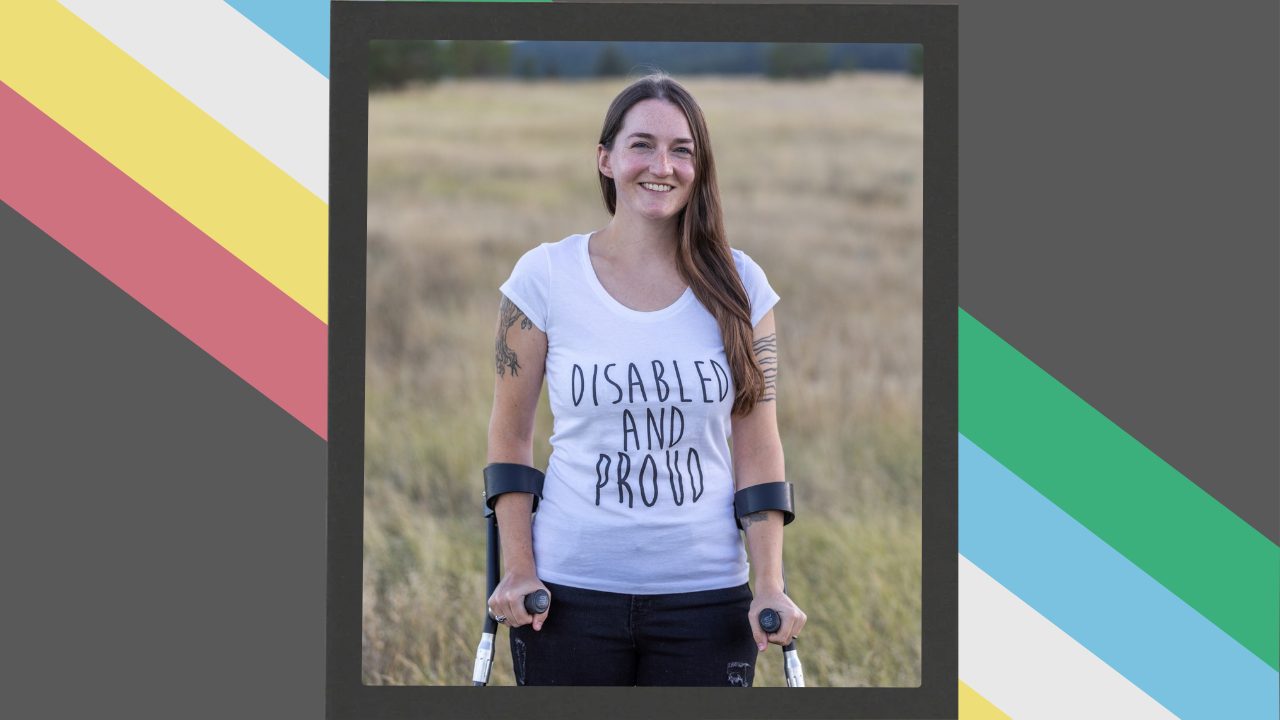
This blog post is the transcript of a webinar for Brookfield Zoo. To watch the video, go to: https://youtu.be/-vXorgzATWg
List of links and resources are at the bottom of this page!
Hello everyone! Thank you so much for having me. I'm really excited to be here. I actually grew up in the Chicago suburbs and have so many wonderful memories of Brookfield Zoo through the years, so it's very cool to be invited here today to talk with all of you.
My name is Amy Denton-Luke, and I'm the creator of Disabled in the Wild, an Instagram account, YouTube channel, and blog where I talk about exploring the outdoors with chronic illness and disabilities. My primary goal is to encourage other people with chronic illnesses and disabilities to find ways to enjoy the outdoors within their abilities and interests, and I also enjoy helping nondisabled folks learn what it really means to be disabled.
I am both chronically ill and disabled myself. I've been disabled for ten years and chronically ill for about 20. My primary symptoms include severe chronic pain in both of my legs, chronic fatigue, cognitive dysfunction, as well as mobility issues, so I've also been a forearm crutch user for about nine years.
My chronic illnesses and disabilities, as well as my love for the outdoors, have shaped who I am today and led me to Disabled in the Wild. It was not in my life plan to do this type of advocacy work; it's something I kind of stumbled on as a result of life circumstances.
So today I want to start by sharing the story of how I got here. Then I will share some of the work I do through Disabled in the Wild and the main topics and messages I like to talk about, including how to find the right activities, outdoor spaces, adaptive gear, and approach to make our time outdoors as enjoyable as possible. Then I'll briefly discuss Disability Pride Month, what it means, and why we celebrate it, and lastly, I'll share some book recommendations and ideas for how to be an ally to the disabled community.
A Brief History of Illness, Disability, and the Outdoors
I have always had a deep love for the outdoors. Growing up in the suburbs, I lived for fishing trips to the nearby forest preserve and exploring the woods with my cousins in Wisconsin. I was really interested in rocks and fossils. My grandfather was a rockhound, and he would give me a few of his rocks every time we went to visit him.
I was also the kid who had her whole life planned out. I was 7 when I decided I wanted to be a paleontologist. I was 12 when I decided I wanted to go to MSU Bozeman for college, which was the place for studying dinosaur paleontology. I had dreams of getting my PhD by the age of 30, and then having a successful career in academia and fieldwork. I was absolutely determined that I was going to be the exception to the quote I always heard adults say: "Life doesn't always work out as you plan". Well, I almost didn't make it to even the first step in my plan.
I was not born disabled, but I have had health issues since birth. Those health issues became debilitating when I was a senior in high school. One day, I became severely ill and just didn't get better. I was eventually diagnosed with Median Arcuate Ligament Syndrome and endometriosis. And over the next five years, from age 17 to 22, I had five laparoscopies and two angioplasties in an attempt to get those conditions under control.
Thankfully, I was still able to move to Montana for college in 2007. Undergrad was very difficult as I was managing debilitating and painful conditions, and I had to teach myself a lot of the course material because I missed classes so often. During my freshman year, I took a few anthropology classes, and I loved it so much that I decided to switch my major and go into paleoanthropology to study human evolution instead.
After graduating with my bachelor’s degree in 2011, I decided to take a couple of years off before going to grad school because I wanted to make sure my health was stable enough first. But I still wanted to maintain some closeness to my interests, so I spent that time doing two things besides just working: rockhounding and volunteering.
I was inspired by one of the rocks my grandfather had given me to go rock collecting, aka rockhounding, on the Yellowstone River in Eastern Montana for the first time. After I found my first big Montana Agate, it quickly became my obsession. I started taking more rockhounding trips each year, all over Montana and into Idaho and South Dakota. I searched for agates, petrified wood, Jasper, crystals, sunstones, fossils, and sapphires. Every year, I got better at rockhounding, and every year my collection grew. My collection now weighs about 2,500 pounds; I have an entire room in my house dedicated to rocks, plus a few dozen totes stacked in the garage, and I recently set up my lapidary shed where I am learning to cut and polish stones using some of my grandfather’s and great uncle’s lapidary equipment.
After college, I also volunteered at the Museum of the Rockies. When the curator heard of an independent study I did in undergrad cataloging stone tools for one of my professors, she put me to work cataloging a collection of stone tools for her. And after a few years of working on stone tool collections, my career path changed once again. I decided I wanted to study lithic technology and experimental archaeology instead.
After a couple of years of low symptoms, I started to feel more confident in my health. My illnesses seemed to be under control and fairly well managed, so I decided I was ready to go to grad school. I was accepted into U of M, we moved to Missoula, I was happily looking forward to this next chapter... and then I got sick again. And it got really bad really fast. I went from being able to work two jobs 6 days a week, plus rockhounding, volunteering, spending time with friends… to being unable to eat or sleep, having severe joint, muscle, and nerve pain 24/7, chronic fatigue, brain fog and cognitive dysfunction, difficulty focusing, reading, and retaining new information, confusion and disorientation, clawing in my hands and difficulty with gripping, swollen lymph nodes, migraines, vertigo, weight loss, hair loss, muscle weakness, numbness and tingling, and more all within just a few months. And then one Friday afternoon in September of 2015, the right side of my body went numb and tingly. I noticed my right leg was struggling to keep up with me, and within a week, I was using a cane.
A year later, I was diagnosed with Chronic Inflammatory Response Syndrome, which is caused by a genetic susceptibility and exposure to certain biotoxins, including harmful molds, bacteria, and viruses. Genes load the gun, and exposure pulls the trigger, as they say. What follows is a cascading effect of both an overfunctioning and underfunctioning of the immune system, a massive inflammatory response, and hormone disruption. Symptom-wise, it mimics MS, fibromyalgia, chronic fatigue syndrome, and others.
I was initially quite determined to stay in school. I even did a month-long field dig in Canada when I was very, very ill and had no business being there. But the hardest part was keeping up with classes. I was dealing with cognitive dysfunction that made learning and even thinking extremely difficult, and it just became too much. The final straw was when most professors refused to provide the accommodations I needed to stay in school, such as remote participation. Despite my best efforts and the support of my wonderful advisor Dr Anna Prentiss, I had no choice but to drop out in 2016.
To be honest, the worst part of all of this was losing my cognitive abilities. I was never an athlete, so losing my physical abilities was not as difficult a transition for me. But I had always taken pride in my intelligence, and losing that was far more difficult to accept.
It was always my plan to go back to school once I was well enough. It was heart-wrenching for me to keep putting that dream on hold. But as the years went by, it became more and more clear that going back to school just was not going to happen, and that archaeology, academia, and field work were simply not something I was going to be able to do. It was devastating.
After losing such a big part of my life, I was determined to hold on to the other pieces of me. Even though I was very sick, I continued to try to get outdoors and rockhound. It was my happy place and the thing that kept me going. At the time, I could only be outside for an hour, maybe two, before becoming too sick, in too much pain, and barely able to walk. My condition and legs were growing progressively worse, and it became obvious that the cane just wasn't enough anymore, and my body really needed more support.
So in August of 2017, I bought forearm crutches, and on my 28th birthday, I went for my very first walk with them, and it was one of the happiest days of my life. I was suddenly able to walk so much farther and faster and with so much less pain. It was such a relief after struggling so long with the cane, and I was kicking myself for not switching sooner. The biggest things the crutches help with are fatiguing weakness, which means the farther I walk, the weaker my leg muscles become and the less function and control I have, especially in my right leg. The crutches also help with my chronic nerve and muscle pain by taking pressure and weight off my legs, which makes it less painful both during and after using my legs. The crutches also give me stability, confidence, endurance, less recovery time, and freedom. I felt like I could do anything.
That first walk with forearm crutches was life-changing and gave me a lot of hope, but I still wondered if it was even possible for someone like me to continue exploring the outdoors. That's when I started searching online for encouragement and hope. I found one video on YouTube of a man walking on a trail through the woods with forearm crutches, and a couple of pictures on Instagram of a forearm crutch user hiking with a group called Resilient Squad, founded by Edgar and Rosie Rodriquez. It was not long after that when Syren Nagakyrie founded Disabled Hikers. All of these people gave me the courage and the permission to try to explore the outdoors and figure out what works best for me.
How I Learned to Explore
Through a lot of trial, error, and flare-ups, I learned a lot about what works for me in the outdoors over the years.
First, I realized that I am not a hiker. It takes me about an hour to walk a mile, sometimes more depending on the terrain, and I can only walk about two miles in a day total. If I need to, I can walk a little faster and a little farther, but it's just too difficult and painful, and I don't enjoy the pressure of having to do persistent forward movement with a single destination in mind that I may not be able to reach. So hiking for the sake of hiking is just not a good fit for my abilities.
Rockhounding, however, is a good fit for my abilities, which is what I'd rather be doing anyway. Most of the sites I visit are on BLM land, where I don't have to walk too far from the truck to get to the collection areas, which also means I'm not far from help if I need it. I can also explore at my own pace, going as slowly as I need to, which is actually ideal for surface collection anyway, so you can spot the rocks you're looking for.
The biggest thing has been learning how to take breaks on my adventures and feel comfortable resting in nature, so that I can better regulate my symptoms, especially pain and fatigue. Sometimes that means using a portable chair, but if I need to, I've also been known to take a quick nap on the riverbed. I've learned what gear I need to bring so I have everything I need for the day, and don't have to waste my legs on extra trips back to the truck. And most importantly, I've learned to be gentle with my body, to listen to what it needs, and to go at the pace my body wants rather than constantly pushing through.
Before I became disabled, I remember trying to hike with a few different groups in college, and I could never keep up with them. Even back then, I was very slow. I needed a lot of breaks. The people I went hiking with were not always the most patient. I was always getting pressured to push myself beyond my limits, to catch up and keep up, and it made me feel like crap. While I did enjoy hiking, I hated that there was always this expectation to do it quickly, to rush through it, to get to the top to conquer the mountain, to spend five whole minutes enjoying the view, then race back down the trail. That experience has had a major impact on how I view outdoor recreation even today, and I have realized that I don't have to approach the outdoors that way anymore.
Being disabled has given me a new outlook on exploring the outdoors. It's a much slower, more intimate, and grounded approach to the outdoors, and I have grown to appreciate this new way of being in nature. I love that I can let my body lead the way, enjoy where I am in the moment, and feel safe and at home resting in nature and tending to my body as needed.
Over the past ten years, I have made a lot of progress with my health, but even though treatment has reduced my symptoms significantly and I can physically do a heck of a lot more than I could when I began this journey, I have no interest in fighting my body or conquering a mountain or being an athlete. I just want to sit next to the river. I want to drive into the grasslands and wander around for a while. I want to be gentle and go slow; to lean into what my body needs and explore at my own pace and within my own abilities. I want my body to be enough as it is. And I want *other disabled people to know that that's an option too.
Disabled in the Wild
There was a time when it was so important for me to see examples of other disabled people exploring the outdoors. I was grateful for the few examples I had, but I remember wishing there had been more. That's when I realized that I could be that person for others. I could be the person I needed when I was younger and newly disabled.
So in January of 2022, I started Disabled in the Wild because I wanted to share my love of the outdoors and to encourage other disabled folks to enjoy outdoor recreation, but the biggest motivation was actually a need to advocate for disabled people in general. I had witnessed disabled lives being treated as disposable and acceptable losses throughout the pandemic, and it weighed on me quite heavily. I felt this need to find a space where I could use my voice and help people understand that immunocompromised, chronically ill, and disabled lives are worth living and worth protecting as well.
So I started by creating an Instagram account, where I liked to share pictures, personal experiences, and short stories. I am a writer, so I prefer writing long-form content, so I created the blog to explain my thoughts in detail and my lived experience more thoroughly, for example, the Challenges and Privileges of my Disability Experience. I wanted to help my local disabled community, so I took on the project of writing accessibility reviews for some local outdoor spaces after being inspired by Syren Nagakyrie's work for Disabled Hikers. Then I started doing some videos for YouTube, turning some of my blog posts into video format, for example, "Tips for Exploring the Outdoors" and "My Must Have List for Outdoor Adventures". I've also made a few adventure videos to show others how I like to enjoy the outdoors and how I do it with my disabilities.
After about a year or two of being on social media, more people and organizations began to find my work and reach out to me. I was invited to give a guest lecture for the University of Maryland, I was featured in two local magazines, and I made a video for an Explore Austin event. After I did a review of their forearm crutches, Millennial Medical reached out to me, and I've been working with them to give away free forearm crutches to those who need them. The president of my rock club recommended me to do a webinar for the Montana Library Network, who then recommended me to do a webinar for the Network of the National Library of Medicine. They also put me in touch with Montana's Fish Wildlife & Parks, whom I helped with some of their accessibility initiatives last summer and pointed out what improvements could be made to our state parks.
Sometimes it's interesting to see where life takes you. It's amazing what kind of doors will open when you are passionate about something; when you work hard, stay consistent, get involved with your community, and take opportunities as they come. Being able to help people, and specifically being able to use my difficult experiences in order to help people, has given my life a lot of meaning again. And what I didn't expect was how being involved in the disabled community would help me too; it has given me a sense of belonging, a place of healing, and a big boost in my confidence. This community has helped me believe that I have something to offer the world, so I can now take the next step in my journey.
But I will return to that later. Next, I will share some of the things I talk about through Disabled in the Wild.
Disability & Chronic Illness
First, I always like to go over some of the basics of disability because when we talk about disability, a lot of folks just think about a wheelchair user, but disability includes a lot more folks than that. It's not just people who use mobility aids. And in fact, the majority of disabled people actually don't have a visible or apparent disability, meaning you can’t tell they’re disabled just by looking at them.
A disability simply means a person struggles with one or more daily functions or activities. There are many types of disabilities that affect different parts of the body and different daily functions. It doesn't have to be a total loss of function; it can vary in severity and extent, and it can be dynamic, changing day to day.
The terms disability and chronic illness cover a lot of people with a big range and variety of support needs, so when it comes to exploring the outdoors with those illnesses and disabilities, they will also have vastly different abilities in terms of their mobility, range of distance, and activity level.
Outdoor Activities
So what outdoor activities might a chronically ill and/or disabled person enjoy? This will depend on what kind of outdoor spaces you have access to, your abilities and disabilities, and what's a good fit for you and your interests.
Starting with folks who have high energy and range of mobility, finding hiking trails that are shorter with little elevation gain might be a good fit. For those with more upper body strength, there's kayaking, canoeing, or rafting. Or if you have the adaptive gear, there are activities like mountain biking or skiing.
Adaptive sports organizations are a great way to try adaptive sports. These are nonprofit organizations that plan and organize outdoor activities for people with disabilities. They have adaptive equipment and people to assist throughout the activity, whether it's skiing, paddle boarding, kayaking, mountain biking, and more. There are quite a few of these organizations, so I definitely recommend looking that up in your area.
For people who have moderate energy levels or mobility ranges, there are nature trails that have mostly flat paths with some benches along the way. Wildlife refuges, forest preserves, or state parks are great for wildlife viewing, birding, or practicing nature photography. Fishing is another fun activity that you can often do while sitting.
For those who have lower energy and need more gentle or low spoon activities, you can go to the beach or a fishing access to sit next to a river, ocean, or lake. Or have a picnic at a nearby park. If you don't want to do any walking, you can drive through national parks or national forests and enjoy nature from the comfort of your vehicle.
If you need activities to enjoy from your own backyard, sit or lie in the grass or on a blanket, and watch the clouds moving across the sky or the trees swaying in the wind. You can get a potted plant that you can water, take care of, and watch bloom.
If you need to stay in bed or on the couch, place a bird feeder outside your window so you can birdwatch from bed. Or do what I used to do when I was at my sickest: find nature videos to watch online and try to imagine you're there in person. Ask yourself, "What do I see, hear, smell, and feel?"
There's always some way we can connect with nature, even if it's something small, simple, or short. Go for 20 minutes or an hour instead of the whole day. Spending time in nature can look however you want it to look. It's just about finding your own way of enjoying the outdoors that works for you and your body. That's really all that matters.
We kind of have to unlearn how we've been conditioned to approach the outdoors, especially out here in the West. Many of us have internalized this idea that outdoor recreation can only look a certain way, but we don't have to conquer a mountain or do a ten-mile hike to enjoy the outdoors, and we don't have to somehow overcome our disabilities and be a Supercrip. It’s okay to slow down, be gentle with your body, and just enjoy being in nature.
Accessibility in the Outdoors
So what types of features can make an outdoor space accessible or inaccessible for a disabled person? Just like disability doesn't solely mean a wheelchair user, accessibility doesn't solely or necessarily mean a paved path. Because each disability and every disabled person is different, their access needs are going to be different as well. The main accessibility categories I like to talk about are parking, restrooms, paths, benches, and signage.
For parking, is there accessible parking? And is there van-accessible parking? Keep in mind, some folks require that extra protected space to get in and out of their vehicle.
For restrooms, are there restrooms available? Are they located farther into the site or just at the parking lot? That can make a big difference for folks with bladder and bowel conditions. Are the restrooms ADA accessible? Are there steps and stairs to get to the restroom?
For pathways, what is the material of the path? Finely crushed gravel, chunky gravel, boardwalks, natural dirt paths, concrete, asphalt; there are pros and cons to each one.
I know sometimes people have concerns that accessible paths will be an environmental issue or an eyesore, but it does not have to be concrete or asphalt for it to be accessible, just a firm, mostly flat surface. To my knowledge, assessing a site, determining the best path material, and what impact it will have on the surrounding environment is something that is always carefully considered. Plus, disabled people want to feel immersed in nature too, so if there's a way for the path to be accessible without using concrete, I think most disabled folks would be in support of that. I personally like finely crushed gravel paths because they are accessible for most people, they are easier to maintain, they blend in nicely with nature, and for me personally, they don't trigger flare-ups the way hard surfaces do. Everyone will have a different need and preference here, though. There is no one-size-fits-all when it comes to accessibility.
Other factors with paths: how wide are the paths? Are there bumps and holes, or is it fairly even? Are there obstacles like tree roots or large rocks, rough transitions, or other tripping hazards? Lifting your feet can be difficult and physically exhausting for some folks, so if there are a lot of obstacles, it can actually change the difficulty level of the trail for them. Also, are there steps and stairs or any steep hills? How far is the walk from the parking lot to the point of interest?
Next, are there benches? How many benches and how far apart are they? Do the benches have back support? This would be helpful for people with fibromyalgia or chronic fatigue syndrome, where pacing is especially important.
For signs, are the trails clearly marked? Are there signs that point where to go, especially at forks in the trail? This one is essential for people with cognitive issues or folks with low vision.
Some outdoor spaces will have additional accessible features, like accessible picnic sites, campsites, fishing platforms, viewing platforms, and even kayak launches. I also always think it's helpful to know what views and activities are available at a site, so I know if it's worth visiting and worth the flare-up afterward.
Having detailed and accurate site information is really important to be available so that each person can decide for themselves if a site will be accessible to them and a good fit for their abilities.
In the future, it would be great to have improved accessibility and a consistent standard in how public outdoor spaces are built and fixed moving forward. The biggest barrier to this is, of course, money and maintenance, but I believe that it's worth advocating for. I always like to say that it’s not necessarily our disabilities keeping us from outdoor spaces but the lack of accessibility. Because when those access needs are met, we can enjoy the outdoors like everyone else.
I do understand that every site can't be accessible to every person, most disabled people understand and acknowledge that. I don't expect 20-mile hiking trails deep in the mountains to have perfectly flat paths and benches every 200 feet. But I do believe our state parks, historical sites, certain areas of wildlife refuges and national parks should be as accessible to as many people as possible. These are public outdoor spaces that are intended for use by the general public, so disabled people should have equal and equitable access to them.
Accessibility is something that benefits everyone. Nondisabled people enjoy accessible features too- they use benches, benefit from clear signage, enjoy larger bathroom stalls, or the convenience of accessible picnic sites. Whether it's individuals, families with young children, or older folks whose mobility and fitness is shifting with age. We will all become disabled if we live long enough, so keep in mind that someday, outdoor accessibility will directly benefit you too.
Adaptive Gear
Next, I want to talk about mobility aids because a lot of folks really struggle to start using them. People sometimes feel embarrassed, self-conscious, or think their condition isn’t bad enough to use a mobility aid, but you don't need to have a total loss of function in order to justify using a mobility aid.
If you think a cane, rollator, or trekking poles can help you reduce symptoms like pain or fatigue, or increase stability, balance, endurance, or confidence, and that’s all it takes for you to get outside more and enjoy the outdoors, then it’s worth it. Increasing your quality of life is a completely valid reason to use one. You don't have to use the aid all the time, every day, or for every activity, just when you feel like you need it.
Mobility aids are not a negative thing, or somehow giving up on yourself or giving in to disability. Mobility aids exist to support our bodies the way they need to be supported and help us continue living our lives the way we want to live.
In addition to mobility aids, I highly recommend looking into adaptive equipment rentals. These are places that have various mobility aids and adaptive gear that you can rent for a certain number of days and a certain price, although it is often free. This includes regular mobility aids like rollators and wheelchairs, to more specialized all-terrain and beach wheelchairs, as well as ramps to get the chair in and out of your vehicle. There's also adaptive outdoor gear like kayak and boat equipment, adaptive ski sets, even bow hunting wheelchair attachments, and more. This is an amazing resource, and I would encourage everyone to utilize it.
There are also certain outdoor spaces that will have their own adaptive equipment available to borrow at that particular site on the day of your visit, for example, a state park might have a wheelchair or two available at the visitor's center that you can use on specified trails within the park. I've also seen more specialized all-terrain or beach wheelchairs available through a wider area, like the town, the county, or through local universities, where there's some flexibility on where you can take the equipment for the day or the week.
Lastly for equipment, I wanted to talk about outdoor gear and finding your own personal must-have list for outdoor adventures. For example, I have two lightweight, compact, portable chairs that I bring depending on what activity I’m doing- one chair for longer breaks in one spot and a stool for quick breaks while I'm walking. They're both quick and easy to set up and put away.
As a forearm crutch user, my backpack needs to be large enough to fit everything I need for the day, but narrow enough so I'm not bashing my elbows into the pack as I'm walking. I wear padded weight-lifting gloves to protect my hands while walking, which is especially important when you are weight-bearing on your crutches. Also, my hiking boots need to be lightweight and nonbulky, so I don't trip over my own feet.
As a rockhound, my hands are constantly covered in dirt, mud, algae, and probably cow poop, so I bring hand wipes and hand sanitizer to clean my hands when I need to eat food with my medication. I also bring a dry bag to keep my medication water and dirt-free.
Those are just a few examples. Everyone's must-have list will be different, of course, depending on the location you're in, the terrain, what activities you're doing, plus your particular illnesses and disabilities.
Rest & Recovery
Sometimes it's not about fitting our bodies into how we recreate outdoors but adapting how we recreate outdoors to fit our bodies. One of the most helpful things we can do is rest, and not just during our adventures, but before and after as well.
Rest is important in the days leading up to your adventures in order to save your energy and make sure you're starting that activity with low symptoms. And it's important to rest after your adventures, because it's pretty common for people with chronic illnesses to have flare-ups after doing pretty much anything.
The same goes for during our adventures. Taking breaks periodically, for example, sitting down to rest for five to ten minutes every hour or so, is a really good way to check in with yourself, help manage symptoms, and keep everything regulated. This can make all the difference in getting to spend more time outdoors, having fewer symptoms, making it a more enjoyable day, and maybe making it an easier recovery in the days afterward, too.
I know rest is something that a lot of us struggle with, myself included. So many chronically ill people are ambitious overachievers, and we live in a culture that tells us to push through at any cost. When you're chronically ill, you have to push through symptoms at some point, or you'll never do anything at all, but there's a difference between pushing slightly outside of symptom tolerance and completely destroying your body. It takes a long time to unlearn that tendency to overdo it. For many of us, the hard part is not doing more, it’s doing less; it's slowing down, taking breaks, and listening to what our bodies need. So I want to remind everyone that "pushing through" is not the only strength we can carry. Listening, resting, and pacing are all strengths too.
The great thing about taking breaks is that it gives you time to really take in the view, enjoy the scenery, and truly experience a place rather than just passing through. And that's why we're there in the first place. Once we can recognize that, it's easier to let our bodies lead the way. Because if the goal is to enjoy ourselves, then we must also enjoy, or at least tolerate, being in our bodies while we're out there.
A New Approach
Learning this new approach doesn't happen overnight. It can take years to adjust to your new life and new limitations and figure out what works for you. You have to first go through a period of grief and acceptance, which can sometimes take years. You have to let go of the way you used to do things and find a new way to do them.
It can be really difficult for people who became disabled later in life to accept that they can no longer do what they used to. When we return to the outdoors with our new limitations, we often have the same expectations of our bodies that we did before becoming sick or disabled, and we make comparisons with how we used to do things. That makes the adjustment even more difficult.
It's really important to first take the time to acknowledge that grief, and then when you're ready, try to start over. Meet your body where it is right now. Get to know this new you and your new body. Learn a new way of interacting with nature and existing in the outdoors. Be open to trying new activities or trying your old activities in new ways.
And keep in mind it's not always sunshine and rainbows. There are still going to be those moments and days when you'll get frustrated with your body, and you won't want to deal with your limitations or take another break. It's an ongoing process of adjusting and accepting, but we're nothing if not adaptable. Over time, we make room for our illnesses and disabilities, and living with them becomes our norm.
Representation Matters
Losing our abilities doesn't mean we lose our interests. Of course, when people are new to chronic illness or disability, it can definitely feel like the outdoors are no longer for you, and that's why representation is so important. They say, "You cannot be what you cannot see", and I want to show disabled people that these spaces are for them too. Everybody belongs outdoors.
When non-disabled folks see disabled people in the outdoors, it challenges their assumptions and socially conditioned biases about what it means to be disabled. Ability, like so many other things, is not a binary but a spectrum, and we all have our own limitations and support needs, including non-disabled people, whether it's 2 miles in a day with forearm crutches or 10 miles in a day with trekking poles. A disabled person's limitations and support needs may be more profound or obvious, but it doesn't make our adventures inherently less fulfilling and our time in the outdoors any less valuable.
We will all, at some point, need to grieve the loss of our abilities. Any one of us can become disabled or more disabled at any time, whether it's from illness, injury, or age, and, again, we will all eventually become disabled if we live long enough. When we are able to see examples of disabled people living their lives with their disabilities, and especially when we see examples of disabled folks doing something we love to do, it can be encouraging to know that, whatever happens, we can find a way to continue doing the things we love, too. So that's what I hope to provide for both disabled and non-disabled folks: Hope, reassurance, and encouragement.
Disability Pride Month
Unfortunately, our culture views disability as solely a tragedy, a fate worse than death, and not a life worth living. While yes, we have our challenges, and it can be a very difficult life at times, that doesn't mean our lives can't still be meaningful and fulfilling. We can still have careers, families, relationships, hobbies, goals, and dreams. We have our good days and bad days, our difficulties as well as our blessings, just like anyone else. We adapt; we adjust. Life goes on after disability.
We celebrate Disability Pride Month, not because we are necessarily proud to have our disabilities, but because we are proud of the lives we continue to live with our disabilities and within a world full of ableism and inaccessibility. Like other pride months, it's not necessarily about the identity itself, but about being unashamed and proud of who you are in the face of a world that has historically oppressed you and continues to marginalize you based on that identity.
We celebrate Disability Pride specifically in July because the Americans with Disabilities Act was passed on July 26, 1990. It's a very important piece of legislation that a lot of disabled people came together to fight for. Disability Pride Month is not only an acknowledgement of that history but a reminder that there's still more work to do because of the discrimination, ableism, and barriers that still exist today, both at an individual level and systemically.
Some of the issues that need to be addressed include protecting Medicaid, improving access to affordable healthcare, making medication more affordable, building more affordable and accessible housing, ensuring equal employment opportunities with fair wages, increasing access to education and special education programs, reducing caregiver abuse, and addressing the forced poverty and marriage inequality that comes with disability assistance. Plus, the ADA is incomplete and constantly under attack, and needs to be protected and expanded. Disabled people deserve that protection as well as equality, respect, and inclusion.
Disability Pride Month is also a great time to celebrate disabled people and their accomplishments; to celebrate this wonderful, supportive community, and the crip kinship we all share; and to celebrate the joy and meaning we continue to make in our lives with our disabilities.
Disability activist Harriet McBryde Johnson said, "For those of us with congenital conditions, disability shapes all we are. Those disabled later in life adapt. We take constraints that no one would choose and build rich and satisfying lives within them. We enjoy pleasures other people enjoy and pleasures peculiarly our own. We have something the world needs."
Resources
In honor of Disability Pride Month, I have some book recommendations for everyone.
Demystifying Disability is the perfect introduction to disability because it covers a lot of basics. This is the one I recommend to everyone. It's a great place to start.
Disability Visibility is a collection of essays put together by Alice Wong, and it's written by people with various disabilities and backgrounds addressing various topics and issues. It's a great introduction to the lived experience of disability from different perspectives.
Care Work is the one I most recommend for disabled people, especially those who are interested in community and activism.
A Disability History outlines the history of the concept of disability in the US, who that term has included at different times and how it has changed over time, as well as important legislation and policy.
Crip Kinship and Skin Tooth and Bone: both of these are also for disabled people who are interested in activism, as well as the culture and art of the disabled community.
You can read summaries and reviews of these books on my blog if you're interested.
If you'd like to learn more about the things I talked about today, I have a list of my blog posts and YouTube videos to check out, along with the transcript from today's talk on my website. On that page, I also included a few links to adaptive sports organizations, adaptive equipment rentals, and accessible hiking trails in the Chicago area.
Here are some other great ways to show up as an ally:
Challenge the assumptions and biases you have about disability as you notice them come up. This is a good practice to get into the habit of doing for any bias about any marginalized group. Ask yourself where your beliefs and assumptions come from, whether or not they're actually true, and how you know, then do some follow-up reading on the subject.
Have conversations about it with your loved ones and share the information you've learned with others.
Donate to organizations that help disabled folks, like disability rights groups.
Advocate for accessibility in the outdoors as well as the indoors.
, whether it's in buildings, at events, or in outdoor spaces. Include some accessibility information and pictures when you're writing reviews.For the chronically ill and disabled folks: share your stories, talk about your access needs and experiences, participate in the conversation, and don't be afraid to get involved. We could always use more people calling attention to these issues. Disabled people are not a monolith; no one person can represent all disabled folks. You may have a different experience and viewpoint, and we want to hear your story and your voice too.
Support legislation and programs that affect disabled people. Consider the impact that certain policies may have on disabled people and let your representatives know your concerns.
Lastly, protect the immunocompromised and medically vulnerable. Get vaccinated if you are medically able to, wear a mask when necessary, and if you are sick, stay at home. Disabled lives are worth living, and they are also worth protecting.
In Closing
In 2022, around the time I began Disabled in the Wild, Ursula Wolfe-Rocca said, "It can be overwhelming to witness/experience/take in all the injustices of the moment; the good news is that they're all connected. So if your little corner of work involves pulling at one of the threads, you're helping to unravel the whole damn cloth."
It's all of our responsibility to take care of our communities and make sure everyone is safe and has equal rights and opportunities. It's all of our responsibility to take care of the environment and ensure it's safe and healthy for future generations. But none of us can do it all; it's about finding somewhere we can help make the world a little better and finding our own thread to pull to make a difference.
And so, for me, the meandering path continues. While I have loved all the work I've done through Disabled in the Wild, in the future, I would like to broaden my scope of advocacy work. I have gone from paleontology to paleoanthropology to archaeology, and now to medical anthropology.
I hope to study complex chronic conditions, how they are experienced by patients, and how they are treated in our healthcare system-medically, socially, and culturally. I am once again teaching myself a subject the way I had to in college. I am finding ways to adapt to my cognitive issues, the way I had to learn to adapt to the physical ones. And I am on to my next big goal. I found my thread to pull.
Illnesses and disabilities change you; they change your values, priorities, and worldview, and they have shaped who I am today. If I were cured tomorrow, I would not return to my old life or my old career path. There is no going back. What a shame to throw away the hard-earned lessons I learned, for all my suffering to go to waste. As Francis Weller says, don't waste a perfectly good heart attack.
I believe it's an important and very beautiful thing to take our unique experiences, our traumas, our privileges, our natural talents, and Interests, and put them all together and find a way of giving it to the world. After that major career loss, I never thought I'd find my place in the world, and after all this meandering, it feels good to be at a place where I feel like I have arrived. I found the thing I'm here to do.
My life didn't work out as I planned, and thank goodness for that.
Links
Social Media
Website: www.disabledinthewild.com
Instagram: https://www.instagram.com/disabledinthewild7/
YouTube: https://www.youtube.com/disabledinthewild
A Beginner’s Guide to Chronic Illness and Disability in the Outdoors
(practical tips for outdoor recreation)
Blog: https://www.disabledinthewild.com/blog/nlm
YouTube: https://youtu.be/8_0Lu1gI_Vw
Learning How to Explore the Outdoors with Chronic Illness and Disabilities
(my story, a few tips, myths & misconceptions)
Blog: https://www.disabledinthewild.com/blog/learning-how-to-explore-the-outdoors
YouTube: https://youtu.be/mLq3oVf_spU
Tips for Exploring the Outdoors with Chronic Illness and Disability
YouTube: https://www.youtube.com/watch?v=J0Lc00AveMs
My Must Have List for Outdoor Adventures
Blog: https://www.disabledinthewild.com/blog/my-must-have-list-for-outdoor-adventures
YouTube: https://www.youtube.com/watch?v=B9Zm__RsilE
Accessibility in the Outdoors
Blog: https://www.disabledinthewild.com/blog/accessibility-in-the-outdoors
YouTube: https://youtu.be/hI2MSdDLQk0
Accessibility Reviews: https://www.disabledinthewild.com/reviews
Why I’m Writing Reviews for Local Outdoor Spaces: https://www.disabledinthewild.com/blog/why-im-writing-reviews-for-local-outdoor-spaces
The Challenges and Privileges of my Disability Experience: https://www.disabledinthewild.com/blog/the-challenges-and-privileges-of-my-disability-experience
The Sacrificial Lambs of the COVID Pandemic: https://www.disabledinthewild.com/blog/the-sacrificial-lambs-of-the-covid-19-pandemic
Every Body Belongs Outdoors: https://youtu.be/zAOK_e9vJ5g
Book Reviews: https://www.disabledinthewild.com/blog/5-books-to-read-for-disability-pride-month
Books
Demystifying Disability: https://www.goodreads.com/book/show/56922093-demystifying-disability
Disability Visibility: https://www.goodreads.com/book/show/51456746-disability-visibility
Care Work: https://www.goodreads.com/book/show/38402046-care-work
Disability History: https://www.goodreads.com/book/show/17262462-a-disability-history-of-the-united-states
Crip Kinship: https://www.goodreads.com/book/show/57677163-crip-kinship
Skin Tooth and Bone: https://www.goodreads.com/book/show/44177925-skin-tooth-and-bone
Chicago Area Links
Shirley Ryan Ability Lab Adaptive Sports: https://www.sralab.org/services/adaptive-sports
Adaptive Sports Resources: https://www.sralab.org/lifecenter/resources/listing-adaptive-sports-resources#1
Find a Club- Illinois: https://www.usopc.org/paralympic-sport-development/getting-started/find-a-club/illinois
Chicago Park District Special Recreation Programs: https://www.chicagoparkdistrict.com/special-recreation-programs
Great Lakes Adaptive Sports Association: https://glasa.org/
Chicago No Limits Fishing: https://www.chicagoadaptivesports.com/chicagonolimitsfishing
Judd Goldman Adaptive Sailing Program: https://juddgoldmansailing.org/
Kayak Chicago- Adaptive Paddling Program: https://kayakchicago.com/
Wilderness Inquiry: https://wildernessinquiry.org/
Mobility City Equipment Rentals: https://mobilitycity.com/chicago-il/rentals/
Midwest Mobility Equipment Rentals: https://midwestmobility.net/
Medical Supply and Equipment Vendors: https://www.sralab.org/lifecenter/resources/listing-durable-medical-equipment-vendors
Accessible Trails:
Forest Preserves of Cook County: Accessibility: https://fpdcc.com/about/accessibility/
12 Scenic Wheelchair Accessible Trails in Illinois: Nature for Every Ability: https://www.garriottsonthego.com/12-scenic-wheelchair-accessible-trails-in-illinois-nature-for-every-ability/
Wheelchair Accessible Trails in the Chicago Area: https://rampnow.com/wheelchair-accessible-trails-in-the-chicago-area/
Best Wheelchair Accessible Hikes in Cook County: https://hiiker.app/hikes/illinois/cook-county/wheelchair-friendly
Accessible Parks: https://www.sralab.org/lifecenter/resources/listing-accessible-parks-people-disability
Illinois Accessible Nature: https://www.accessiblenature.info/?page_id=345